Coloring Jesus

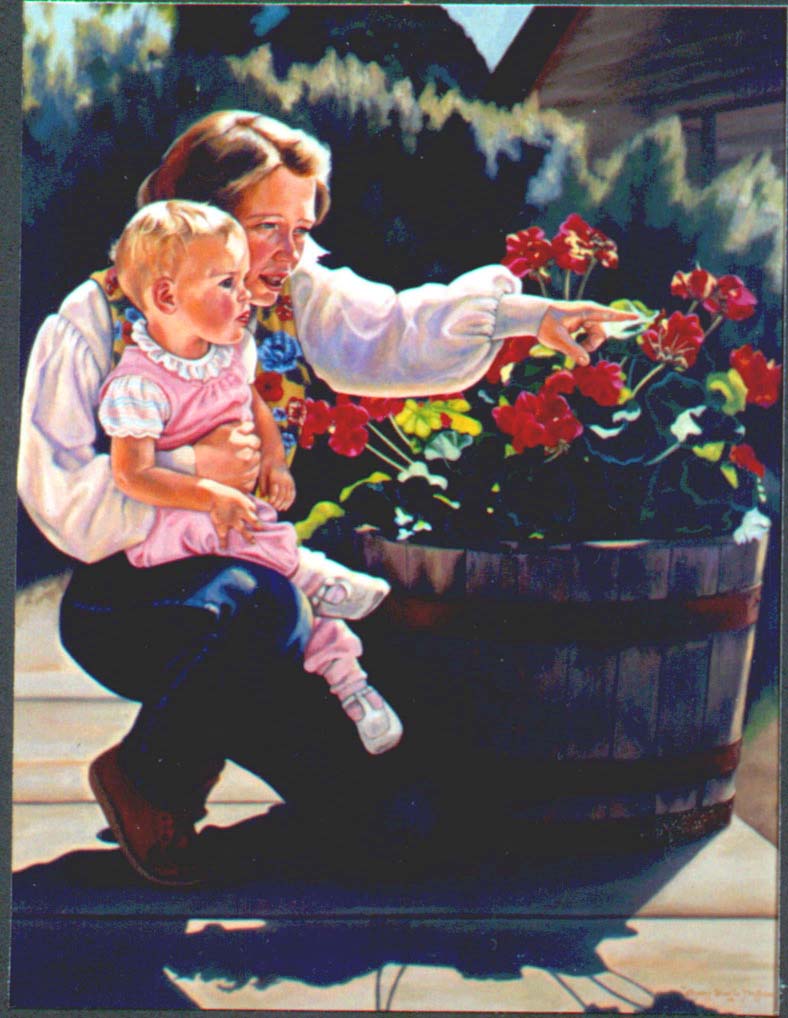
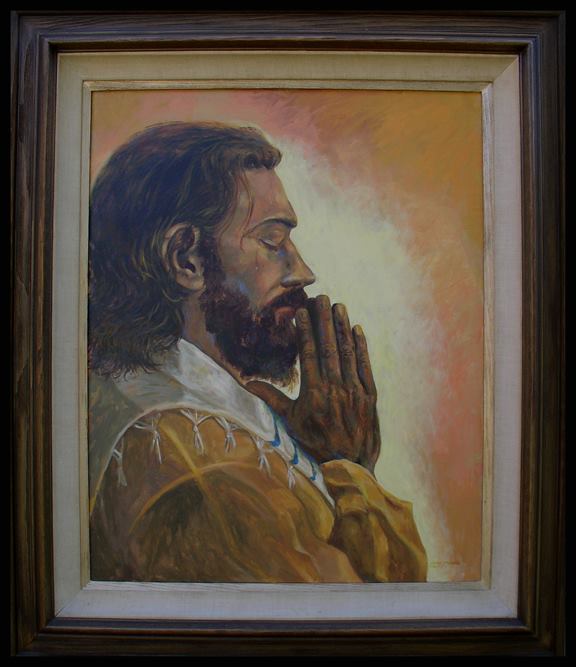
Jesus praying with a tear slipping down His cheek.  Prayer will often bring me to tears.  Prayer is opening our hearts to God and speaking out of the depth of our souls.  Sometimes words aren't enough in prayer.  Sometimes tears say so much.
Jesus praying with a tear slipping down His cheek. Prayer will often bring me to tears. Prayer is opening our hearts to God and speaking out of the depth of our souls. Sometimes words aren’t enough in prayer. Sometimes tears say so much.

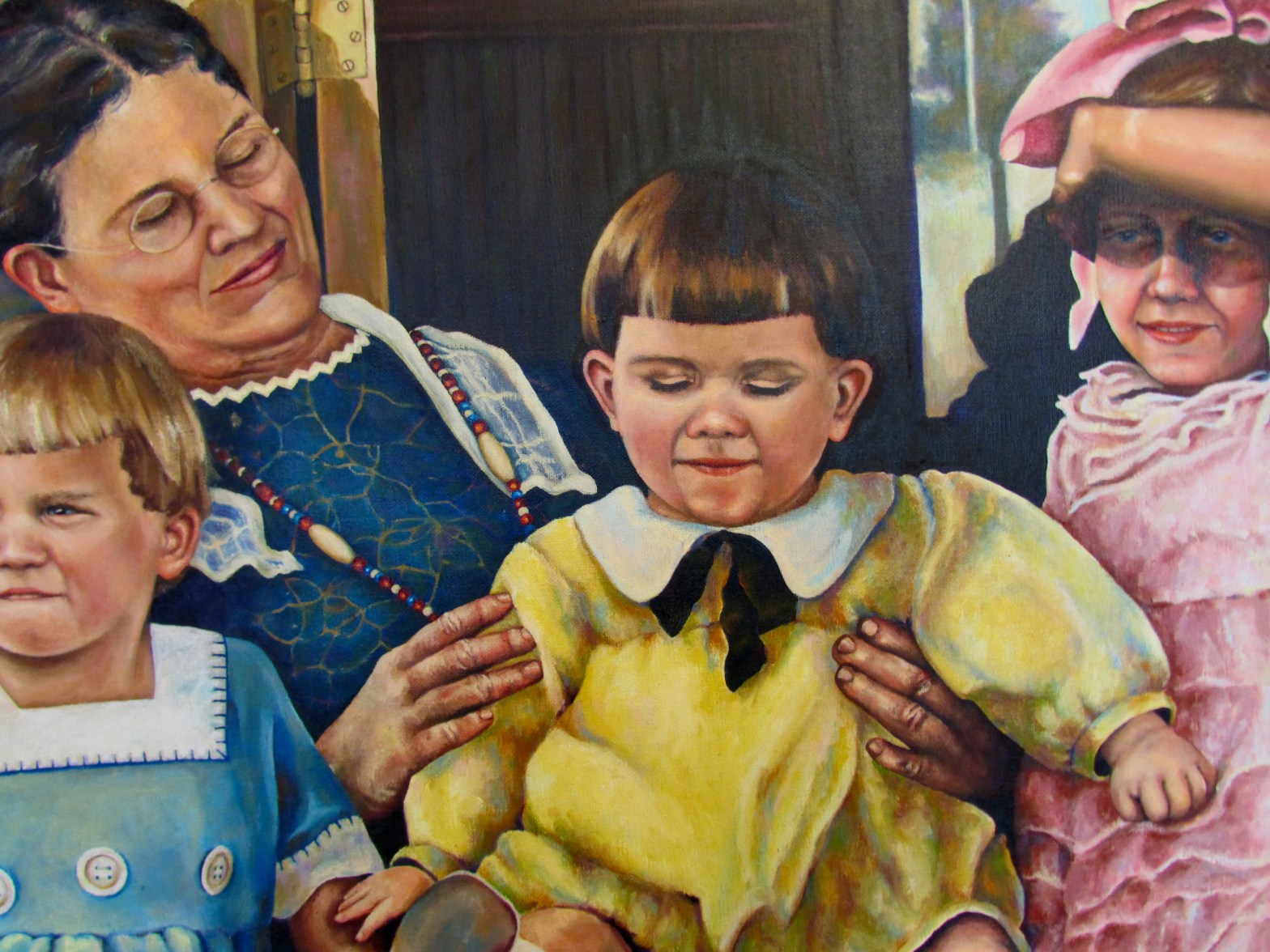
The first time I remember that art was a special part of my life  was when I was a preschooler in my home church.  Maybe that’s why faith and art for me are intricately linked.  I loved my home church in Long Beach where I grew up.  My dad, a marvelous craftsman, had made the cross in the sanctuary and he made all the cribs in the infant’s room.  In my memory there were quite a few cribs so we must have had a lot of young families.  I remember looking in that nursery with the little choo choo train on the wall that said PVACC (for Palo Verde Avenue Christian Church).  Because of this particular early memory I am quite sure that I must have been very young and in one of those cribs as I viewed that wall.

It was in this little room that I sat, cross legged on the floor in a circle with other preschoolers and the Sunday school teacher.  On this morning she kept tearing pages out of a Bible coloring book for each of us to color.  Coloring was my favorite activity!  I could hardly wait as she tore page after page and gave them to other chidren.  Oh, I volunteered for each page, but she kept passing me by.  Each page in the coloring book had the outline of a Bible time animal to color.  When she would ask, “who wants to color this one?” hands would shoot up, including mine.  But as she handed off one page after another she would say, “Penny, put your hand down.”  A little confused and disappointed, I would comply.  I was a very compliant child.  But when she showed us a cute little donkey, well, I just could’t stand it anymore.  When she asked who wanted to color this donkey I had to put my hand up again.  I would love to color that donkey!  That’s when it happened.  She scolded me, but it changed my life.  “No Penny, you are good at art.  You’re going to color Jesus!”

A little stunned from the tone of her voice, yet amazed that she thought I colored well I sat back and turned those words over and over again in my mind.  “You are good at art.  You’re going to color Jesus!”

I haven’t stopped “coloring Jesus” ever since.  I’m thankful for a teacher who told me something about myself that I did’t know.  Encouragement, even if said in a scolding voice, can last a life time.

Drawn to God

ImageAs I prepare to teach a local drawing class I am reminded of the foundational aspects of drawing.  Like scales to a musician, drawing is a basic skill for all art forms.  When we begin to draw we start observing the world around us with different eyes.  We start to contemplate those forms around us that we consider pleasing and evaluate the “whys” as to what constitutes beauty.  We gain a greater appreciation for nature.  If we look closely we can sense not only the beauty of the entity created, but the magnificence of the Great Creator.  Drawing brings my heart closer to God because I realize He is a lover of detail, which means He cares about every little thing in my life.

A Whole Lot of Art Going On

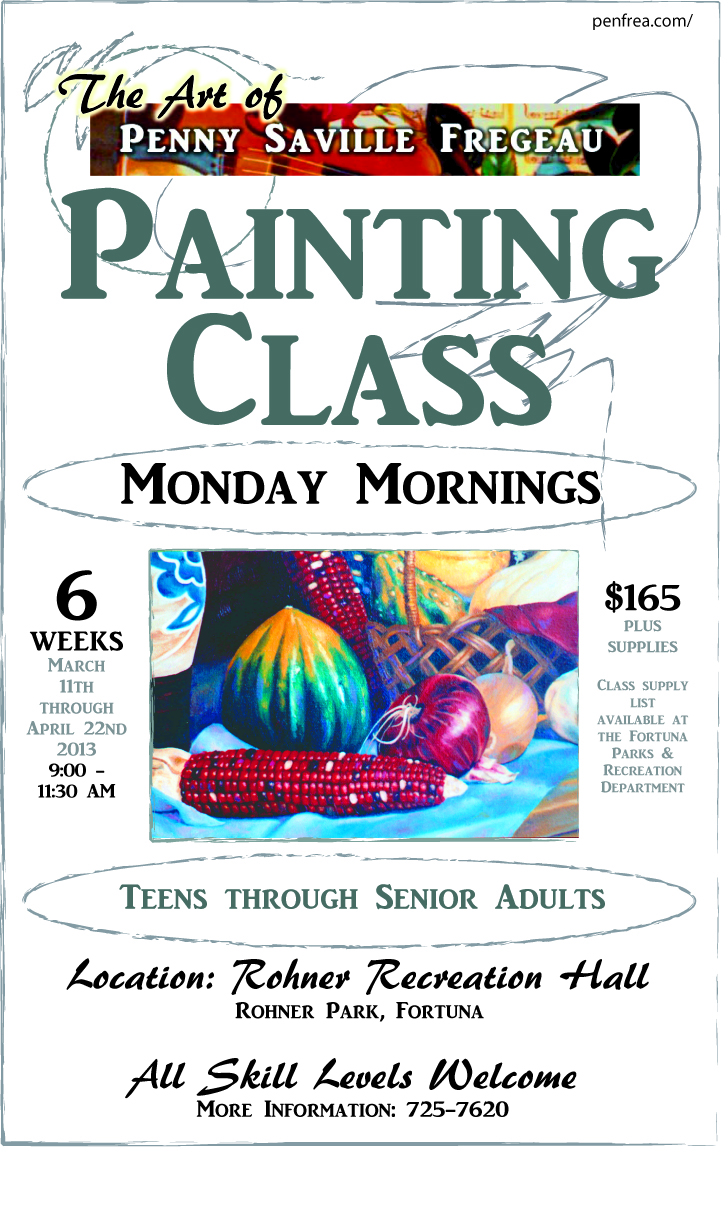
painting_classsrI’m looking forward to the joy of teaching art in our community!  This class will be on Monday mornings at the Rohner Recreation Hall at Rohner Park in Fortuna, California.  We will be exploring how to paint pictures of a world filled with glorious color and light by using acrylics on canvas.  Sign ups are at the Park and Recreation office.

Offering a Local Art Class

Drawing_classOn six consecutive Tuesday evenings, from February 26th – April 2nd 2013, 6:30 – 8:30 PM, I’ll be offering a drawing class at the Fortuna Fabric and Craft Shop – 2045 Main St. in Fortuna, California.  All skill levels are welcome.  The class cost is $100 plus supplies (drawing paper, pencils & an eraser).  The supplies are available at the shop.  You may call the shop for more information:  (707)725-2501.

A Limited Palette Part 4 – My Favorites


We live in a world filled with color and light.  All the marvelous colors in the world can be mixed by using a limited palette.

It is important to make the distinction that when I refer to a limited palette I am using colored paint that, used  together, can be mixed to create the whole spectrum of color.

Naphathol Red Light, Quinacridone Magenta, Alizarin Crimson, Yellow Light Hansa, Cadmium Yellow Light, Phthalocyanine Blue and Titanium White acrylic paints form my limited palette.  These are Liquitex brand colors, however artists have their own favorites.  These are mine.  This is the palette my teacher, Jim Faber, used and taught us. However, instead of the Magenta and Crimson there was a color called Acra Violet that he used.  As a convienence we would also add Raw Sienna or Yellow Oxide.

The advantage of using a limited color palette, besides the savings in the cost of paint, is that it forces the artist to learn and understand color thoroughly.

A Limited Color Palette – Part 3 – The “Ish”

artist and childLearning and understanding color is made simple by the “ish.”  Even my four-year-old granddaughter understands the concept.  We learn to evaluate and describe any color by  voicing it’s ingredients in order from greatest to least – and then add the ish.  What is that color the army uses so frequently?  Oh, it’s greenish-yellowish-reddish.  Mix those colors with mostly green, then some yellow and a small amount of red and you will nail it with accuracy.  Children love experimenting with color.  At a MOPS (Mother of Preschoolers) art day gathering yesterday the children were enjoying the hands on experience of mixing paint both with brush and hands.  We saw a lot of gray as it is often too tempting to simply mix two colors and leave it alone.  To a preschooler there always must be more color and inevitably yellowish-reddish-greenish-bluish-orangish-purplish with some white and whalla – gray(ish).  But there you have it – the six colors on the color wheel – the primary and secondary colors – to describe any color in the world.  It’s vitally important to have pure pigments or else the colors will always be, well, muddy(ish).  Designer color names do not help.  Stick to the basic colors and you’ll be delighted as your knowledge of color increases and your ability to paint accurate color improves with each canvas.

A Limited Color Palette Part 2 – No Black.

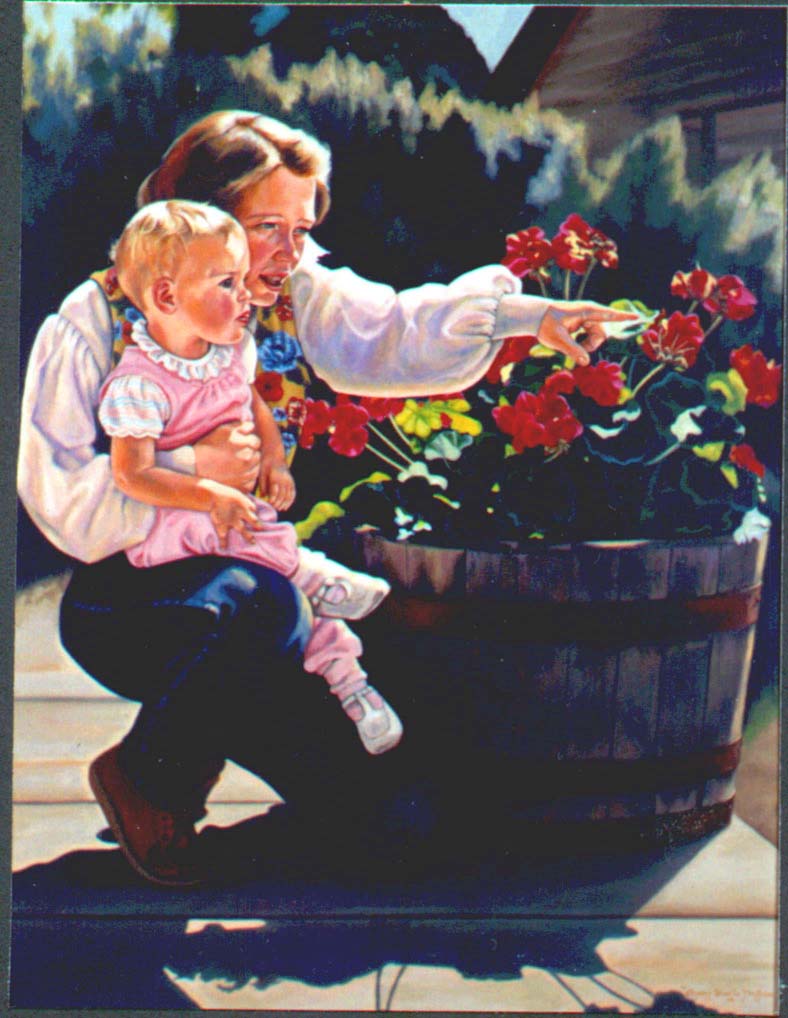
Very dark colors make up the shadows in this piece called "Colour My World" but there is no black paint in the piece whatsoever.
Very dark colors make up the shadows in this piece called “Colour My World” but there is no black paint in the piece whatsoever.

No Black?  No.  Black is the absence of color.  And we live in a world filled with color and light.  What we consider black is really very very dark color that appear to our eyes as black – dark green, dark purple, dark bluish-brownish-purple, etc.  Painters will argue about this, but in a limited color palette, which has the capability to mix every color under the sun, there is no need for black.  Shadows are not grayed versions of their local color.  Even in dark shadows there is color.  We have to “forget what we think we see and really observe” when it comes to color.  Learning to paint very dark colors instead of black trains our eyes to what is truly in nature.  Look.  Look again.  Black can be too easily used and it is not the true color of what is seen – unless there is utter darkness.  The absence of light means the absence of color.  Vibrancy in painting is accomplished in concentrating on the colors we observe and even pushing the intensity to paint what we intellectually know is there, even if our eyes do not see the color.  For example, how many times have you taken a picture of a sunset, and when it was printed you were disappointed because the picture didn’t do the scene you saw with your eyes justice.  Bingo.  To replicate the true impression of what you witnessed you would have to “up” the color some – adding what you know you saw, but the photograph did not record.  There is a lot of visual action, even in things we initially think are very dark. 

As a Christian painter I notice analogies to faith at every turn.  I would be remiss not to mention that just as there is a lot of action in nature even when we think an area is just plain dark, God is working in our lives, even when we cannot visibly see any action going on in the moment.  In fact in those moments God is especially working. “We walk by faith and not by sight”…even when it seems black.

Finding Your Artistic Voice

One never outgrows one’s teachers. Teachers should be respected for the knowledge and life they have poured into us and for their willingness to share what they have learned. Norman Rockwell, in later years, lamented that he did not consider himself a good teacher because he insisted that his students paint just like him. He came to realize the significance of originality within an individual. We each have a unique fingerprint on this world. Like a musician that must spend countless hours on scales or the athlete that endures countless hours going over the same fundamentals again and again, there is a season in learning where we concentrate on imitating a teacher, and we can learn so much from their tremendous experience. Wise is the student who watches their teacher, pencil in hand and soaks in all they have to reveal to us. Wise is the teacher that understands the value of encouragement and picturing a positive future for their students. There are benefits to both sides of the relationship.

We do, however, at some point have to “find our own voice,” and as my own painting teacher, Jim Faber, would say “become your own best teacher.” We each have a unique role in the world, a special job given us by our Creator, a plan, a purpose and specialized pen stroke that cannot be duplicated by another. There is value in originality and finding one’s own voice. The masterful artists in the world may have learned their craft by imitation, but greatness came about when they blazed their own path.

Psalm 139 speaks of how God created us, knows us in every detail, sees ahead to each day we will inhabit planet earth, values us tremendously and loves us as an individual.

Do not shrink back from viewing the world a little different from everyone else. Your voice, your talent, your contribution is a gift that no other can make. And when you find it, share it with the world.

A Limited Color Palette Part I

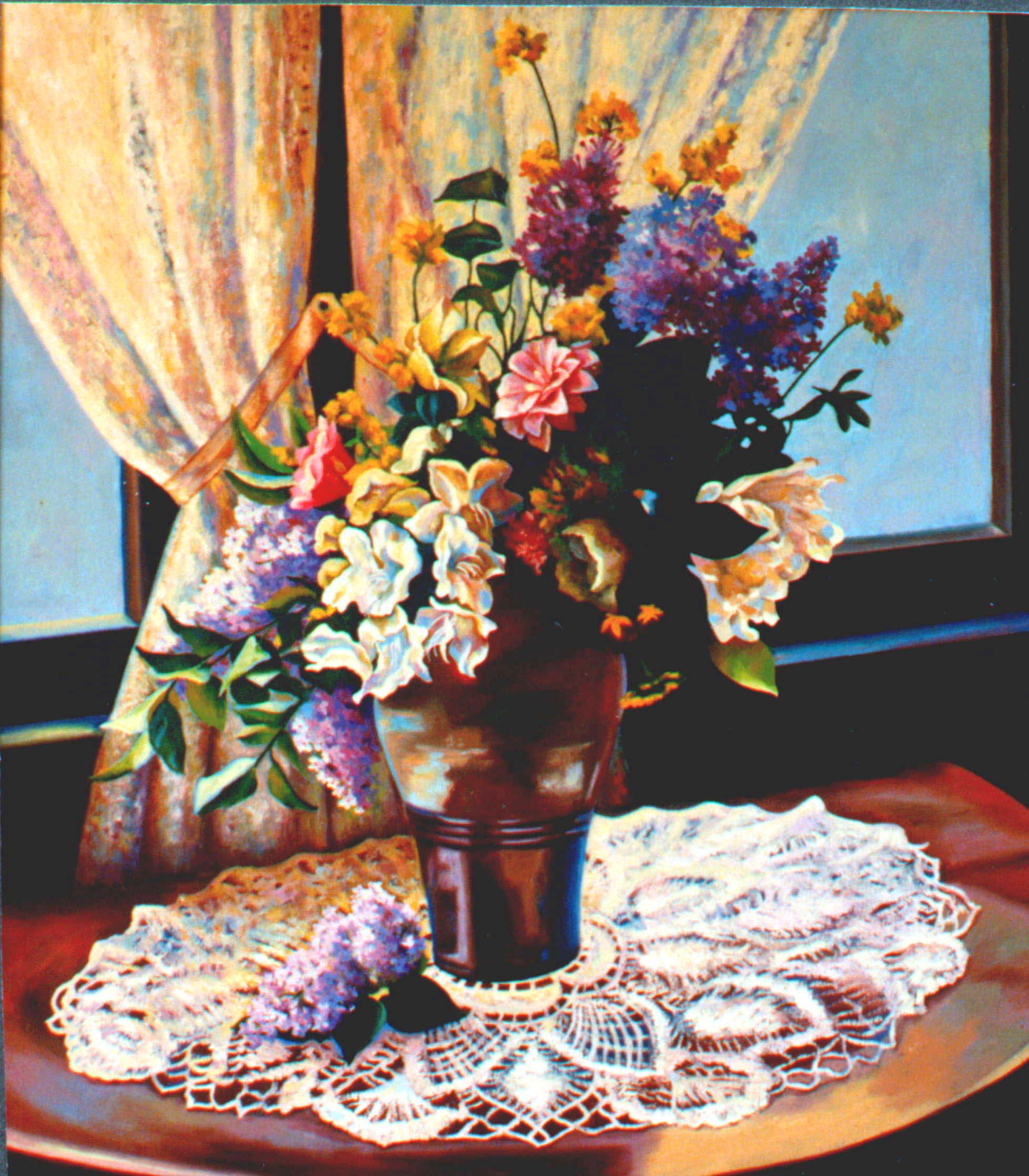
I love the harmony and beauty of the colors in this simple grouping of flowers.

Why use a limited palette when there is conceivably every color of paint under the sun made by a plethora of art companies at our disposal?  While artists will no doubt debate over the brand of products, I adopted my painting teacher’s limited palette and have been thrilled with the success.  What I found were limitless possibilities in color mixing, but more importantly, in incorporating a limited palette I learned how color is created.  In this age where color is readily mixed by computers or selected from computer palettes of thousands and thousands of colors this might seem like insignificant brain-training.  I don’t believe this color creating knowledge to be obsolete or useless and offer to you, the reader,in the next few posts, some of benefits of learning from a limited palette.

With just several hand picked colors of pure pigment one can paint any color under the sun.  When computers were first making their debut, folks were excited by the possibility of sixty-four thousand colors.  My immediate thought was that the human mind can manufacture and infinite number of color combinations!  Sixty-four thousand is actually a small number when compared to infinite.  I’m not slamming the use of computers.  To the contrary, I use them for art endeavors on a daily basis.  But I do not have to depend on computers to create color.  I learned that with a limited palette of paint, an easel, a canvas, a mixing tray and daylight.  It was an intellectual exercise that took quite a bit of time – years!  But mixing color, like many art based endeavors, teaches the mind to problem solve – and that ability pays dividends in many areas of life.  This is a big reason I believe the reduction of art programs in the schools – visual art, creative writing, drama, and music – to name a few – is terribly short-sighted!  Who would not benefit from intellectual exercises in problem solving?  The human gift of creativity is perhaps more multi-sided and useful in all areas of life than the decision- makers of these programs give credit.

"I Can Only Draw Stick Figures"

My husband, daughter and I on a roadside stop in Colorado.  Jim Faber snapped a photo that I used as a basis for this portrait.
My husband, daughter and I on a roadside stop in Colorado. Jim Faber snapped a photo that I used as a basis for this portrait.

Most artists, no matter what their field of endeavor, are at some time told, “wow, I could never do that, I can only draw stick figures, or I can only play “Chop Sticks.”  The words are intended as a compliment, which is fine.  But behind the comment lies the thought that artistry is just something one has or does not have.  While every human being is gifted in different capacities by their Creator, one must also develop their God-given gifts for them to have meaning for other people.  How sad to be given a gift and not develop that capacity!  It’s kind of like loving someone, but never expressing one’s feelings to the object of their affection.  It goes unnoticed and without meaning.

Developing those gifts requires time, commitment and determination. To move forward one may see the need to receive instruction from another, or to work in concert with a few other artists, exchanging ideas and encouragements and thoughtful critique.  If one waits to be “inspired” the development of one’s artistic gifts will suffer.  It’s best to plow through those times we do not “feel” like painting, or writing or practicing that instrument.  A painter paints, a writer writes, a musician plays whether or not they feel like it…that is part of commitment.

The Apostle Paul teaches us that our gifts are not given for our own pleasure.  They are given for the benefit of others.  Although Paul was focusing on “spiritual gifts” the same can be said for “natural gifts.”  If we developed our gifts with the benefit of others on our mind then our art can have great meaning both as we work and as we consider how to brighten someone elses life by the things we create.

As an artist we all appreciate when someone likes our work enough to pay us for it, for that says something significant about the way the art makes them feel.  Far better however, are those times when someone is brought to tears because of something we have worked hard to develop and create.  If someones heart is deeply touched and we have communicated something so tender or thought-provoking that an emotional reaction ensures, then that is like applause to a performer, like a metal to an athlete, like a diploma to a student.  It is worth all the long hours and practice of our craft to be a part of making something that effects another in a positive way.